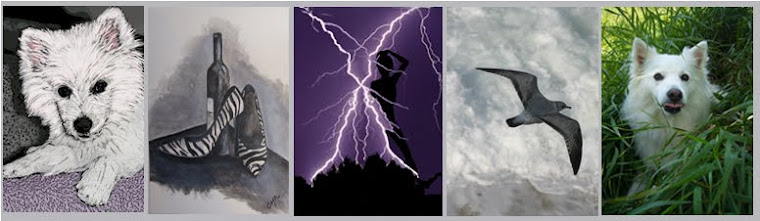
Collage

Collage

Sunday, November 28, 2010

Allowing an Artists Integrity

By Cyn Rene’ Whitfield

There’s an unspoken art that drives us all. It is not in the clay we mold, or oils we mix, or chalk we dust to express ourselves. This art artists know is what drives inspiration and maintaining the integrity of the art. Some are more receptive to its gifts yet, others repel it with their very being. This inspiration is called the art of allowing.

Art is created by allowing a composition to be as it is and capturing its essence through representation. A photographer knows a candid shot is much more powerful than a staged one. Such as in life, if you allow others to live the life they choose you allow in more beauty and experiences than the ones you control. Allowing expands vision, choices and consequential experiences of those choices. Is posing a subject more ethical than a candid action shot?

Artists who invoke an emotion allow for interpretation. Modern Abstract Artists repel so much of the truth that it allows emotional responses to seek untapped places. In opera you needn’t understand the words to evoke the feeling of the message, yet the integrity of the intention is still present.
Vincent van Gogh and Edvard Much both were known to suffer from mental illness. Munch suffered from bi-polar disorder and van Gogh suffered from paranoia, epilepsy and absynth addiction. Yet, through the honesty of their work they were able to maintain integrity in their work. Why? Because, through their art, they provided an honest expression of allowing.
Sources:
Hillman, James (1999) The International Library of Psychology. Emotion: A Comprehensive Phenomenology of Theories and Their Meanings. Routledge Taylor and Francis Group, NY retrieved November 19, 2010 from http://books.google.com/books?id=C1ZgmmVIkPsC&pg=PA226&lpg=PA226&dq=artist+who+invoke+emotion&source=bl&ots=gldBBz3a56&sig=6UI3V9DF_6sinOLYZj14ijdRhCE&hl=en&ei=RAPnTNOZEcL7lwfQ9-D7Cw&sa=X&oi=book_result&ct=result&resnum=9&ved=0CDMQ6AEwCA

Wednesday, October 20, 2010

"life, like art, is merely an interpretation"
                                                             - Cyn Rene' Whitfield

Realism or Surrealism

by Cyn Rene' Whitfield

Oscar Wilde said “Life imitates art, more than art imitates life“. With that understanding it is not those artists from the Renaissance, or the Baroque, or the Neo-Classical eras that express the depiction of everyday life. The ability to represent life most accurately belongs to the Realists. I appreciate these artists as they depict life without embellishment or interpretation. What a better world we would have if we could climb into that canvas and live within the rules of the Realists.

Lately, I prefer to believe that Surrealism is dominating our lives. Surrealism, born out of the Dada movement, Surrealism features the element of surprise and exaggeration. It was intended to be a positive expression against rationalization. Life representative in our world today exists as lies, deception and skewed points of view which the Surrealists would have little trouble duplicating.

When André Breton started the Surrealism movement in 1924, he introduced a style rich with visual imagery from the subconscious mind to create art without the intention of logical comprehensibility. It is no wonder this movement was influenced by the psychoanalytical work of Freud and Jung, Ultimately Jung believed that by understanding how one's personal unconscious integrates with the collective unconscious, a person can achieve a state of individuation, or wholeness of self. Frued believed that we dream when we are tired of responding and receiving stimuli from an environment we wish to change. This withdrawal from reality causes us to stop any interest of conclusions of reality allowing us to escape in fabrications that allow us to cope.

Explore the works of Surrealist artist Man Ray in his 1938, oil on canvas entitled, "Pisces”. Understand Man Ray’s intention of the piece placing the woman lying alongside a fish to create contrasting of similar and different forms at the same time. Fantasy is enhanced using the painting technique known as grattage which involves scraping the paint off the canvas by trowel. How manageable our lives would be if we had the same opportunities to trowel away the hurt, the pain, the deception, the mistrust. To wipe the canvas clean.

Sources:

Surrealism, Retrieved October 20, 2010 from http://www.surrealism.org/

Jungs Approach to Dreams, Retrieved October 20, 2010 from http://library.thinkquest.org/C005545/english/dream/jung.htm

Thursday, October 7, 2010


“Imagination is more important than knowledge”
                                         – Albert Einstein

A Visit to The Renwick Gallery Washington DC

by Cyn Rene' Whitfield

I was in Washington, DC for a business meeting and had a few hours free. Two blocks from my meeting with the General Services Administration (GSA), the largest property owner in the United States, stood one of their buildings, The Renwick Gallery. This branch of the Smithsonian American Art Museum, located near the White House, is dedicated to the richness and diversity of American craft and decorative arts from the 19th to the 21st centuries. The gallery takes its name from the building's architect, James Renwick Jr., who also designed the Smithsonian Castle on the National Mall.

The building was built in 1874, and was originally the home of the Corcoran Gallery to display the private collection of William Wilson Corcoran's art collection. The Corcoran collection expanded and was relocated to where it stands today, Corcoran Gallery of Art. The U.S. Court of Claims was housed in the building until the 1950’s when it too had outgrown the building. The U.S. Court proposed to raze the building but the intervention of the First Lady, Jacqueline Kennedy respected the Empire-style building and had it declared a National Historic Landmark. Mrs. Kennedy then solicited the aid of Secretary of the Smithsonian, S. Dillon Ripley, who requested that the gallery be turned over as a branch of the Smithsonian American Art Museum. The Renwick was subsequently dedicated in 1972, "for use as a gallery of art, crafts, and design." It was renamed the Renwick Gallery in honor of its architect, James Renwick Jr.

I entered through the beautiful glass etched doors of the Renwick Gallery where housed one of the finest collections of American craft in the United States. Its collections, exhibition program and publications highlight the best craft objects and decorative arts from the 19th century to the present. One-of-a-kind pieces created from clay, fiber, glass, metal, and wood from American Art's permanent collection of contemporary craft are displayed.

One of the featured pieces by Mary Van Cline, Cycles of Relationship of Time, 2000 showed the process of pate de verre. Pate de verre involves making a paste of glass that is applied to the surface of the mold, then fired. The big advantage to pate de verre is that it allows for precise placement of particular glass colors in the mold. Other ways of filling the mold often result in some shifting of glass from where it has been placed prior to firing. Pate de verre dates back to the ancient Egyptians, but it really came into its own about a century ago when it was revived by a group of French artists who gave this warm glass technique its current name. The modern equivalent builds on this traditional foundation. Generally the pate de verre process involves creating a paste from frit (small particles of glass). Frit of any size may be used, but most good glass pastes require smaller sizes (even powders) to be used. For this reason (and because the smaller the pieces of frit the more opaque the casting), pate de verre castings tend to be translucent (or even opaque). Once the mold is thoroughly dry and the frit has been secured, the next step is to make the glass paste. In some cases, where the mold has gently sloping sides, the glass can simply be mixed with distilled water to form the paste. Most molds, however, will require that glue be mixed with the glass to form the paste.

Sources:

Warm Glass http://www.warmglass.com/pate_de_verre.htm

“Staged Stories: Renwick Craft Invitational 2009 @ Renwick Gallery” http://dcist.com/2009/08/staged_stories_renwick_craft_invita.php

Tuesday, September 28, 2010

"The most important element in a picture cannot be defined."
                                                                           -  Renoir

3D Prints For the Artist: Real-Life Models — Quickly, Easily, Affordably

By Cyn Rene' Whitfield
Physical models directly from digital data created in hours instead of days makes 3D models extremely beneficial for reproduction.  3D prints can turn a conceptual idea into a reality and have been used for awards, prototypes, and art.  3D prints allow engineers, architects and artists to produce a range of concept models and functional test parts quickly and inexpensively. As a tool for creating models early in the design process, 3D Printing is a both a faster and more affordable alternative to hand modeling. Dimension printers cut days and weeks off the design cycle.  Dimension’s ability to produce quick, inexpensive models made of ABS plastic allows designers to efficiently model multiple concepts right from their desktop.  This process is also referred a “Fused Deposition Modeling” used for detailed models that are tough enough for functional testing and ABS plastic can be sanded, milled, even painted.

My experience in creating 3D prints was with in 2006, a company I worked for, 3DS2, Inc. was commissioned to create a 3D contoured print of an official emblem for the National Parks Service.  This piece was a series of is individually numbered awards to be presented exclusively to retirees from the Service.

The process involved five separate program applications for the original prototype. An original 2D image was provided by the National Parks Services scanned with a flatbed scanner and then converted into Autocad. The design from the model were then contoured. This process was performed by one of the CAD technicians in the office.  I loaded the file into 3D StudioMAX and extruded the lettering. I matched the CMYK values from the original image in Photoshop and assigned them to the computer working model .  Once the 3D print was created in 3D StudioMAX, individual text was added and the print was numbered to make it authentic.  The triangles that make up the model was then examined for water -tightness.  Water tightness is term used to make sure there are no holes in the model because it must be a contiguous surface without voids.Although the geometry of the piece is exact from print to print the art in the artistry finish makes the NPS Arrowhead one of a kind. Each print bears with it a certificate of authenticity to ensure its uniqueness.  This is an exciting new digital media for artists.